Bonded Washers: Features and Applications
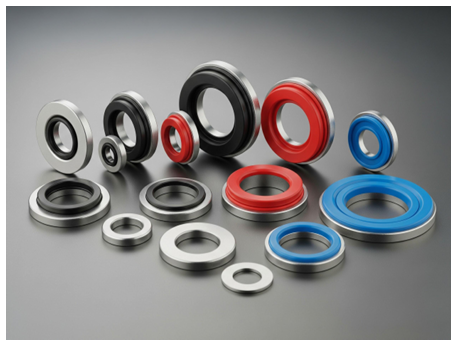
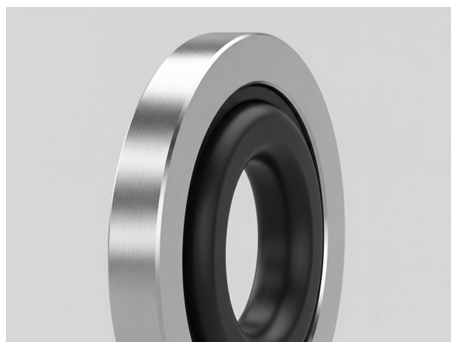
Bonded washers, also known as sealing washers or self-centralising washers, are specialized fasteners designed to provide a secure and leak-proof seal. They consist of two main components: an outer metal washer and an inner elastomeric (rubber) sealing element. This combination allows them to distribute the load effectively while also creating a tight seal against fluids and gases.
Construction and Materials
The construction of a bonded washer is key to its functionality. The outer metal washer typically provides the structural integrity and load-bearing capabilities.
Common materials for the metal washer include:
● Steel: Often zinc-plated for corrosion resistance.
● Stainless Steel: For applications requiring high corrosion resistance.
● Aluminium: For lightweight applications.
The inner elastomeric ring is responsible for the sealing action. The choice of elastomer depends on the application's specific requirements, such as temperature, chemical compatibility, and pressure. Common elastomeric materials include:
● Nitrile Rubber (NBR) Excellent oil and fuel resistance.
● EPDM Rubber Good resistance to water, steam, and some chemicals.
● Viton (FKM) High-temperature and chemical resistance.
How Bonded Washers Work
When a fastener (like a screw or bolt) is tightened, the metal washer distributes the load over a wider area, preventing damage to the mating surface. Simultaneously, the elastomeric ring is compressed between the fastener head and the mating surface. This compression causes the rubber to deform and fill any irregularities, creating a tight seal that prevents leakage. The metal washer also helps to protect the rubber from being over-compressed or extruded, extending the life of the seal.
Key Features and Benefits
● Effective Sealing: Provides a reliable seal against liquids, gases, and contaminants.
● Vibration Dampening: The elastomeric element can absorb some vibrations.
● Load Distribution: Prevents localized stress on the mating surface.
● Corrosion Protection: Can prevent galvanic corrosion between dissimilar metals.
● Easy Installation: Simplifies assembly by combining the functions of a washer and a seal.
● Reusability: Many bonded washers are designed for multiple uses, though this depends on the specific design and application.
Common Applications
Bonded washers are widely used across various industries where a secure and leak-proof seal is critical. Some common applications include:
● Automotive: Fuel systems, braking systems, hydraulic lines, engine components.
● Hydraulics and Pneumatics: Fluid power systems, control valves, pumps.
● Aerospace: Fuel lines, hydraulic systems, environmental control systems.
● Plumbing: Water fittings, pipe connections.
● Manufacturing: Machinery, equipment, industrial applications.
● Construction: Roofing, cladding, general construction.
Types of Bonded Washers
While the basic principle remains the same, there are variations in bonded washer designs to suit different needs:
● Standard Bonded Washers: The most common type, as described above.
● Self-Centralizing Bonded Washers: Designed with an inner lip that helps to centralize the washer during assembly, ensuring proper sealing.
● Flanged Bonded Washers: Feature an extended flange on the metal washer for increased load distribution or a larger sealing surface.